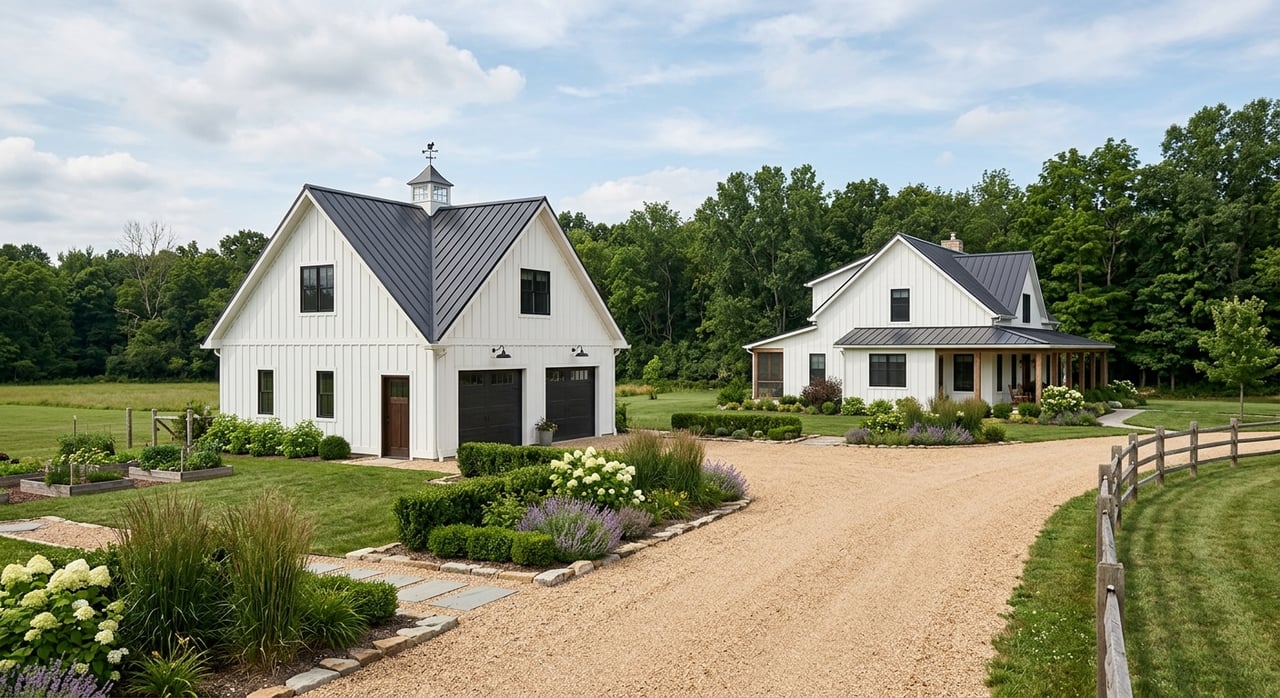
Dreaming about a home with room to breathe, a longer driveway, or space for a barn or garden? Buying acreage homes in Sunbury and Galena can be exciting, but it also comes with a different set of questions than a typical suburban purchase. If you want more land without costly surprises, it helps to know what to verify before you write an offer. Let’s dive in.
Why acreage buying is different here
In Sunbury and Galena, an acreage home is not just about square footage or curb appeal. It is often about jurisdiction, utilities, drainage, lot lines, and permitted use.
One of the biggest local issues is that a mailing address does not always tell you what rules apply. A Galena 43021 address may be outside village limits, and a Sunbury mailing address may still fall in Berkshire or Trenton Township. That is why buyers should confirm the parcel’s exact jurisdiction through the assessor or GIS record instead of relying on the address alone.
Start with the parcel record
Before you get too attached to a property, look at the parcel itself. In this part of Delaware County, that step can answer some of the most important questions early.
Delaware County GIS provides parcel search, real estate search, and a plat-and-survey finder. It can also include map layers such as contours, flood plain boundaries, and school districts. For acreage buyers, this makes it easier to confirm recorded documents, subdivision status, lot lines, and other land details before you finalize an offer.
What to confirm first
- Exact jurisdiction of the parcel
- Lot boundaries and recorded surveys
- Easements and access points
- Flood plain boundaries
- School district and tax district on the property record
- Whether the parcel appears to be part of a split or subdivision
Know which zoning office applies
Acreage properties near Sunbury and Galena may fall under a city, village, township, or county office depending on where the parcel sits. That matters because zoning rules, permit steps, and accessory structure requirements can vary.
The county zoning contact list shows separate zoning offices for Sunbury, Galena, Berkshire Township, and nearby townships. If you plan to add a fence, deck, pool, barn, garage, or other improvement, you will want to identify the correct office early.
Why zoning matters for acreage homes
Sunbury notes that many projects require a zoning certificate before a building permit. Galena’s planning and zoning process can include pre-application meetings, technical review, public hearings, and Planning and Zoning Commission review.
Galena also states that permits may be required for new buildings, alterations, fences, decks, pools, signs, and changes in land or building use. Its zoning code defines barns and private garages as accessory structures, which is a helpful reminder that outbuildings are regulated improvements, not informal add-ons.
Expect a rural-meets-suburban setup
Many acreage properties in the Sunbury and Galena area sit in a landscape that blends rural features with growing suburban infrastructure. That often means a different ownership experience than a typical neighborhood lot.
Berkshire Township’s zoning code offers a useful picture of the local pattern. Its Agricultural District is intended for farmland and undeveloped land where a farm atmosphere and very large lots are desired. Its Farm Residence District is a low-density rural residential district primarily intended for areas without sanitary sewer service.
In that Farm Residence District, the minimum lot size is 1.95 acres when centralized sewer is not available and on-site sewage disposal is used, and 1 acre when centralized sewer is available. In practical terms, many acreage homes in this area may involve wells, septic systems, longer driveways, and outbuildings.
Check water and sewer carefully
Utilities are one of the most important parts of any acreage purchase. You do not want to assume a property has a country-style setup, or full public service, without verifying it.
Inside Sunbury, the city lists AEP Ohio for electric service, Columbia Gas of Ohio for gas, Del-Co Water for water, Local Waste Services for trash, and a sewer account registration process. Galena lists Del-Co Water for water, village sewer service, AEP, Columbia Gas, and Rumpke for trash and recycling.
Just as important, Galena states that onsite septic systems are not permitted within the village’s corporate jurisdiction except in a rare annexation situation involving a pre-existing residence in an unincorporated area. If you are shopping for an acreage home because you expect a well-and-septic setup, this is another reason to verify the exact parcel jurisdiction first.
Key utility questions to ask
- Is water public or private?
- Is wastewater handled by public sewer or septic?
- If septic is present, how old is the system?
- If a private well serves the home, are there recent water test results?
- Are utility services already at the home, or would future improvements require extension work?
Septic, wells, and health review
If a property is outside municipal sewer service, the Delaware Public Health District becomes a key source for due diligence. It reviews lot feasibility for septic, reviews designs, inspects installations, issues operational permits, reviews and inspects private water systems, and samples drinking water.
For you as a buyer, that means septic age, pumping history, well logs, and recent water testing are worth requesting. These records can give you a much clearer picture of how the property functions day to day and whether there may be added costs after closing.
Pay close attention to soil and drainage
With acreage, what happens below the grass matters. Sunbury’s comprehensive plan says soil conditions affect development, agriculture, drainage, ponding, flooding, and filtering.
The plan also notes that centralized sewer makes soil type less critical inside the city. For properties that depend on septic or have uneven grading, soil and drainage checks become much more important. A beautiful backyard can look very different after a heavy rain, so this is not a step to skip.
Review floodplain and stream impacts
Floodplain review should be routine when buying acreage in this area. It is not just an edge-case issue for waterfront lots.
Sunbury’s comprehensive plan discourages residential development in the 100-year floodplain and prohibits development in the floodway. Delaware County’s floodplain code bases its regulations on FEMA flood studies and maps effective December 21, 2023.
Sunbury’s plan also identifies limited floodplain areas along Big Walnut Creek and includes suggested 100-foot setbacks from major watercourses in its critical resources mapping. For larger parcels, that means you should look beyond the house itself and study creek corridors, drainage flow, and actual buildable area.
Understand access, easements, and surveys
With acreage, the shape and legal use of the land can matter just as much as the total number of acres. A parcel may look simple on a listing sheet but involve easements, shared access, or boundary questions that affect how you use it.
Delaware County GIS offers parcel search, plat-and-survey access, and map layers that can help identify contours, flood plain boundaries, and school districts. In acreage deals, surveys, easements, access points, and lot splits are a core part of understanding what you are buying.
Think through upkeep after closing
More land often means more freedom, but it also usually means more maintenance. That includes mowing, tree line care, driveway upkeep, stormwater management, and keeping outdoor areas orderly.
Galena enforces property maintenance rules for issues such as overgrown vegetation, debris, junk vehicles, and deteriorating structures. Even if a property feels private, local maintenance standards still matter. It is smart to match the land size with the amount of upkeep you actually want to manage.
If the land has agricultural use
Some acreage properties may be tied to agricultural valuation rules. If that applies, it is important to understand what happens if the land use changes.
Delaware County’s CAUV materials say land generally qualifies if it has 10 or more acres devoted to commercial agricultural use, or less than 10 acres if it produces at least $2,500 in annual gross farm income. If the land changes to a non-qualifying use, the owner can owe recoupment for the prior three years. The home site and outbuildings are still taxed at fair market value rather than CAUV value.
A simple acreage home checklist
Before making an offer on an acreage home in Sunbury or Galena, try to answer these questions:
- Is the parcel inside Sunbury, Galena, or a township jurisdiction?
- Which zoning office has authority over the property?
- Is the home on public water, private well, public sewer, or septic?
- Are there service records for the septic system or well?
- Are there recorded easements, access limitations, or survey issues?
- Is any part of the property in a floodplain or near a watercourse setback area?
- Do existing or future barns, fences, decks, or pools require approvals?
- Is the land enrolled in CAUV or affected by agricultural valuation rules?
Why local guidance matters
Acreage homes can offer privacy, flexibility, and space that is hard to find on a standard lot. In Sunbury and Galena, though, the smartest purchase decisions usually come from careful local due diligence rather than assumptions.
When you verify the parcel jurisdiction, utility setup, drainage, survey details, and permit requirements up front, you put yourself in a much stronger position to buy with confidence. If you are exploring acreage homes in Central Ohio and want a high-touch, informed approach, connect with Angelina Fox-Smith & Company to schedule a free consultation.
FAQs
What should you verify first when buying acreage in Sunbury or Galena?
- Start by confirming the parcel’s exact jurisdiction through the assessor or GIS record, because the mailing address alone may not tell you whether the property is in Sunbury, Galena, or a township.
How do utilities work for acreage homes in Sunbury and Galena?
- Utility setup can vary by parcel, so you should confirm whether the property uses public water or a private well, and whether wastewater is handled by public sewer or septic.
Do acreage homes in Galena allow septic systems?
- Within Galena’s corporate jurisdiction, onsite septic systems are generally not permitted except in a rare annexation situation involving a pre-existing residence in an unincorporated area.
Why do floodplain checks matter for acreage property in Sunbury?
- Floodplain and drainage review matter because Sunbury discourages residential development in the 100-year floodplain, prohibits development in the floodway, and identifies areas near Big Walnut Creek that may need closer review.
What records should you request for a home with a well or septic in Delaware County?
- Ask for septic age, pumping history, well logs, and recent water testing, since the Delaware Public Health District oversees household sewage treatment systems and private water systems outside municipal sewer service.
Can you add a barn, fence, or deck to an acreage home near Sunbury or Galena?
- Possibly, but you should verify requirements with the correct zoning office first because permits or zoning approvals may be required for structures and site improvements such as barns, fences, decks, pools, and changes in land use.