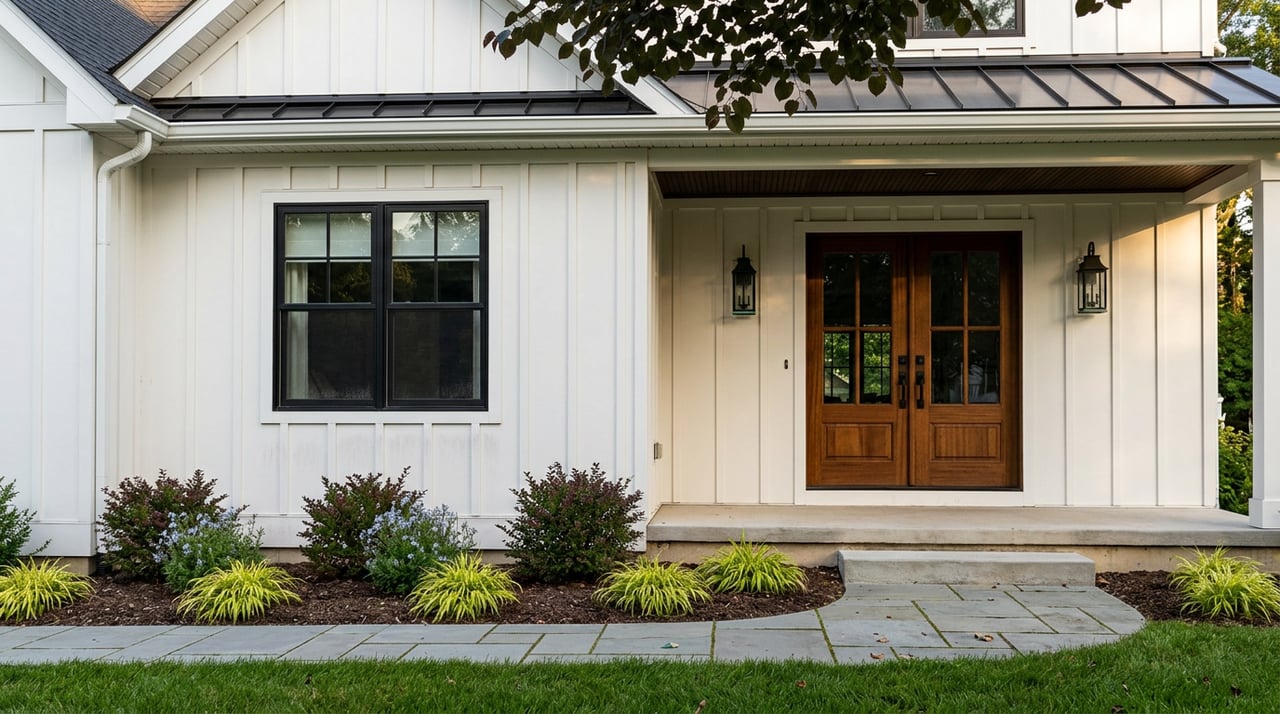
Type "Hilliard Ohio homes for sale" into a search bar and you'll get one number back. A median. Somewhere in the $400,000s, depending on the day and the site. That number is doing a lot of quiet work to look like a single, coherent answer, because Hilliard isn't one housing market wearing one price tag. It's at least four different markets stacked inside one zip code, and the gap between them is exactly where a move-up buyer's plans either work or quietly fall apart.
The bigger issue for anyone actually comparing Hilliard against Dublin, Powell, or Upper Arlington right now is that the citywide median hides the one fact that matters most if new construction is on your list: there's almost nowhere left inside Hilliard's city limits to build it.
The Number That Doesn't Match the Search
Start with supply, because it's the number that explains almost everything else. Earlier this year, in March 2026, homes inside Hilliard's corporate limits sat at just 1.0 months of supply. The broader Hilliard City School District area, which stretches beyond the city itself, sat at 1.2 months. Central Ohio as a whole sat at 1.6 months that same month, according to figures reported through Columbus REALTORS.
A balanced market runs 4 to 6 months of supply. Neither Hilliard nor the region around it was close.
Since then, the region has loosened noticeably. Columbus REALTORS' Central Ohio Housing Report put regional supply at 2.4 months in July 2026, the highest July inventory level the market had logged in more than a decade. That's real relief for buyers shopping the broader metro. What hasn't been published anywhere since spring is a fresh, Hilliard-specific number to match it, and that gap is itself a clue: Hilliard doesn't move as one line on a chart. It moves as four different sub-markets, each tightening or loosening on its own schedule, which is exactly why a single citywide median can look calm on the surface while a specific price band underneath it is still moving fast.
Four Price Bands Wearing One Address
The deeper reason that median jumps around is that Hilliard's housing stock spans more than 170 years of building, and the eras don't behave the same way in the market.
| Housing type | Where you'll find it | Typical price band |
|---|---|---|
| Old Hilliard / Norwich Street historic homes | The walkable core around downtown | $300,000–$500,000+ |
| 1950s–1970s ranch homes | Scattered through Hilliard's first growth wave | $300,000–$420,000 |
| 1980s–2000s subdivisions | Scioto Trace, Dexter Falls, Hilliard Green, Mill Run | $350,000–$550,000 |
| New construction (in-city infill) | Small pocket communities like Hill Farm | $500,000–$800,000+ |
| Condos and townhomes | Complexes throughout the city | $220,000–$280,000 |
The Old Hilliard band is the one that surprises people most. A Victorian-era or early-20th-century home there can carry the same price as a much larger house in a 1990s subdivision, because the buyer isn't just paying for square footage. They're paying to walk to Crooked Can Brewing Company, the Center Street Market food hall, and the Starliner Diner, and to pick up the Heritage Rail Trail a few blocks from their door. The Early Television Museum and the restored 1886 depot at Weaver Park aren't the reason anyone buys a house, but they're part of what keeps that six-block historic core commanding a premium that a straight price-per-square-foot comparison won't explain.
The 1980s-2000s subdivisions, meanwhile, are doing the heavy lifting on volume. Scioto Trace, Dexter Falls, and Hilliard Green have decades of resale history behind them, which is exactly why they trade in a tighter, more predictable band than either the historic core or new construction.
Where New Construction Actually Went
Here's the friction that a portal median never shows you. If you're a move-up family shopping for a brand-new, single-family home and you assume Hilliard proper has a wide selection of it, you're shopping against a shrinking category.
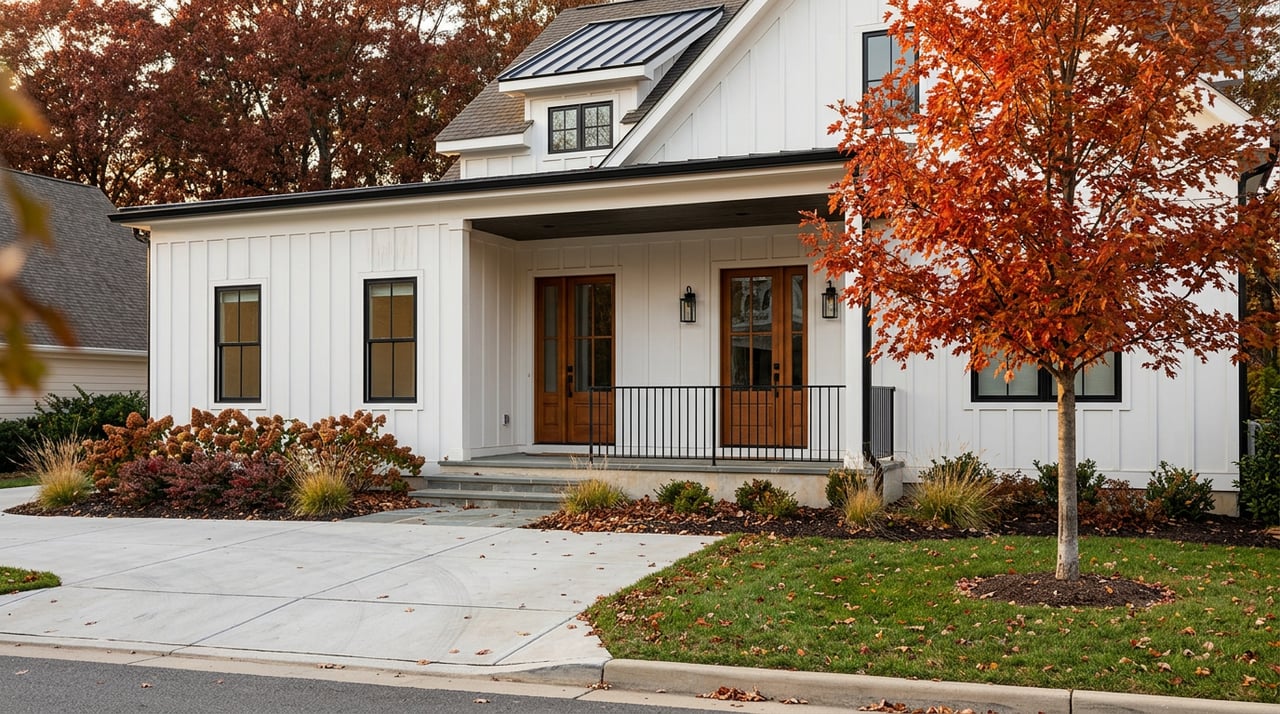
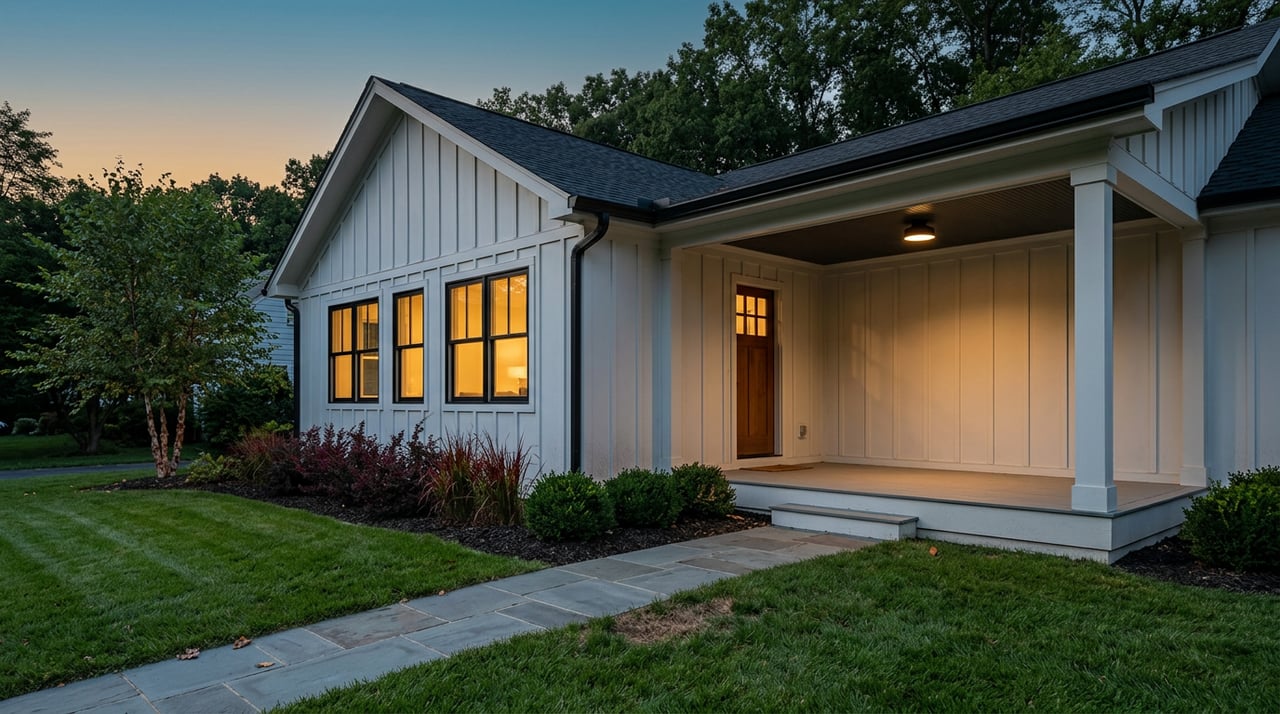
Hilliard has effectively run out of open land for large master-planned new-construction neighborhoods. What's left inside city limits is infill: smaller pocket communities built on whatever parcels remain. Hill Farm, an M/I Homes community near Scioto Darby Road, is a working example, with floor plans from roughly 1,700 to 3,700 square feet and a new Signature Collection arriving this fall. It's a real option, but it's not the same category of choice buyers had when Hilliard's earlier growth waves were still filling in vacant ground.
That scarcity is exactly why so much of the fresh new-construction activity that buyers mentally associate with Hilliard is actually happening a few miles further out, in the Plain City corridor. Darby Station has become the community most often mentioned in that conversation, with homes closing in the $480,000 to $679,000 range as of early 2026, and premium lots along Melody Loop pushing toward the top of that band. For buyers who want a lower entry point, Helena Drive and Maria Drive have been closing in the $335,000 to $383,000 range. It's the same builder relationships, similar floor plans, and more available land, without the wait for one of Hilliard's few remaining infill lots.
None of this means Plain City and Hilliard share a school district. It means the market for "new construction near Hilliard" has quietly expanded past Hilliard's own boundary, because that's where the land actually is. It's also worth knowing that Hilliard's own school district doesn't line up neatly with the city limits either. Some addresses that carry a Columbus mailing address fall inside the Hilliard City School District, and some that sit inside Hilliard's corporate limits do not. The city, the district, and the "Hilliard" you find on a map are three overlapping shapes, not one.
What This Means If You're Comparing Neighborhoods
If you're weighing Hilliard against Dublin, Powell, or another Central Ohio suburb, the useful move isn't to memorize the citywide median. It's to figure out which of the four sub-markets actually fits your list, and then check whether that sub-market has any inventory in it at all right now.
A few practical starting points:
- If walkability and character matter more to you than square footage, look at Old Hilliard first and expect to compete for it.
- If you want an established neighborhood with a long resale track record, Scioto Trace, Dexter Falls, and Hilliard Green are the names to know.
- If new construction is the priority, ask specifically about in-city infill availability before assuming it exists, and be ready to widen your search radius if it doesn't.
- If school district boundaries matter to your decision, verify the specific address rather than the city name, since the two don't always match.
The tight supply numbers mean none of these decisions happen on a leisurely timeline. Homes that are fresh, well-prepared, and priced correctly are still moving quickly, and the sub-market you're shopping in will decide how quickly more than the citywide average ever could.
A Few Questions Worth Asking Directly
Does a "Hilliard" address always mean it's inside Hilliard's city limits? Not necessarily. The Hilliard City School District extends into portions of Columbus and Dublin, so some homes with a different city listed on the mailing address are still zoned into Hilliard schools, and some homes inside Hilliard's corporate limits are not. The address alone won't tell you.
Is new construction realistically available inside Hilliard itself? Yes, but in a narrower form than in past growth waves. Remaining opportunities are smaller infill communities like Hill Farm rather than large master-planned neighborhoods, simply because the open land that supported those larger developments has mostly been built out.
If you're trying to figure out which of these Hilliard sub-markets actually matches your list and your timeline, that's the kind of comparison worth walking through with someone who tracks it closely. Angelina Fox-Smith & Company works across Hilliard and the surrounding Central Ohio suburbs every week, and we're glad to sit down and map out where your specific priorities actually land. Schedule a free consultation and let's start with the neighborhoods that fit, not just the number on the search results page.