Thinking about finishing your basement before listing this spring? You are not alone. In Lewis Center and nearby Olentangy-area communities, buyers love flexible lower-level space that feels move-in ready. In this guide, you will learn which projects add the most value, how local buyers think about basements, and how to plan permits and timelines so you hit the market at the right moment. Let’s dive in.
ROI and buyer appeal in Lewis Center
Families make up a large share of buyers in the Olentangy area. They often prioritize bedroom count, safe play or hangout space, and practical amenities that simplify daily life. When you finish a basement with these needs in mind, you attract more buyers and reduce objections during inspections.
Projects that convert space into legal, habitable square footage usually deliver the strongest payoff. That includes adding a code-compliant bedroom and a full bathroom. Upgrades that remove risk, like waterproofing and mechanical improvements, also protect value because they reduce buyer hesitation and renegotiations later.
Newer construction across Central Ohio often includes rough-ins for future bathrooms and flexible lower-level layouts. Many buyers expect a finished basement or a clear path to finish it quickly. Meeting that expectation can help your listing stand out.
Projects that deliver the most value
Add a legal egress bedroom
A basement bedroom that meets egress and ceiling height requirements can change your home’s official bedroom count. In family-focused areas, an additional legal bedroom often broadens your buyer pool and supports a stronger list price. It also photographs well and gives buyers options for guests, teens, or a home office.
Plan for the time and scope of egress work, which may include excavation for a window well or exterior door. Expect a multi-week process that includes permitting, installation, and inspections. Verify local requirements with the appropriate building department so your project is compliant.
Add a lower-level full bathroom
A full bathroom in the basement increases daily convenience and makes the space more functional for guests or a bedroom suite. When paired with a legal bedroom, the overall appeal improves and can positively influence your sale price.
Adding a bath often requires running drain and vent lines, coordinating plumbing inspections, and finishing with moisture-smart materials. Build in time for rough-ins and final inspections. If your home has a rough-in already, you likely shorten the timeline and reduce cost.
Finish an open family or media room
A well-finished open area is one of the most flexible upgrades you can make. Buyers picture it as a playroom, game room, media area, or home gym. Simple, durable finishes that feel bright and easy to maintain tend to resonate with the widest audience.
Focus on practical choices like luxury vinyl plank or carpet, consistent lighting, and a clean ceiling solution. Thoughtful media or office wiring adds convenience without over-customizing the space.
Projects with variable but strategic appeal
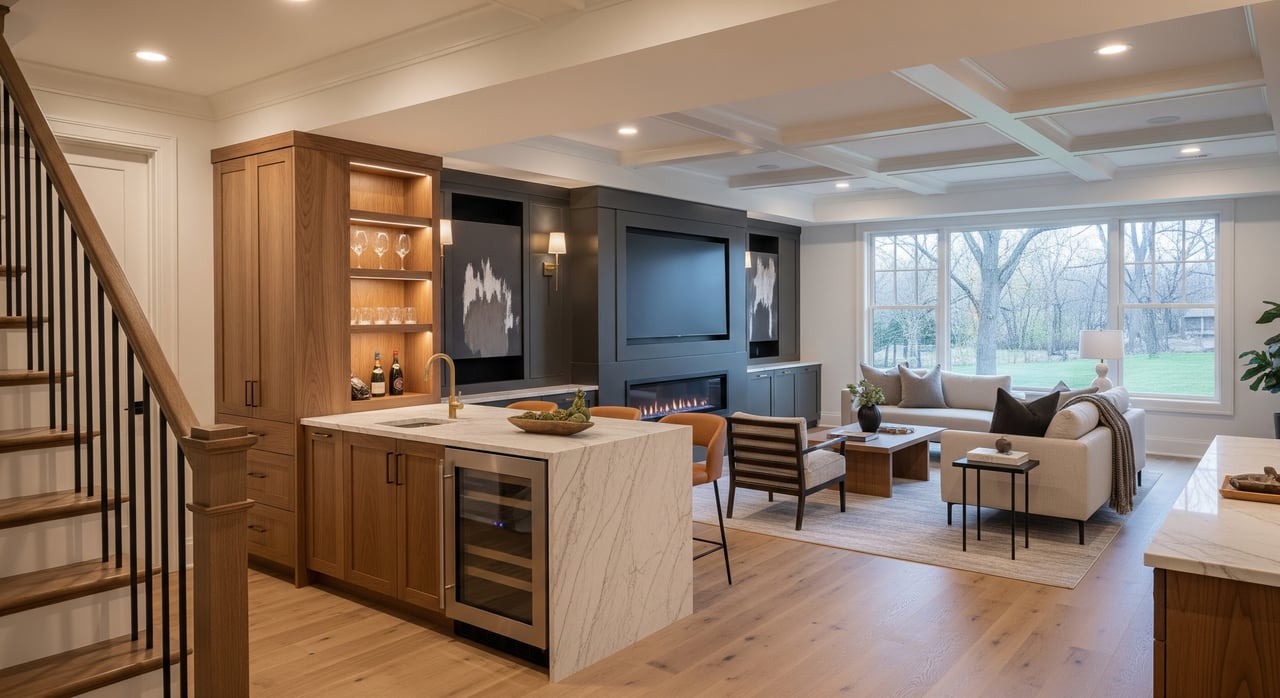
Wet bar or kitchenette
A wet bar or small kitchenette can elevate the entertainment factor, especially in higher price points or for homes where guests will use the lower level. These features create visual interest and lifestyle appeal.
That said, they often have more variable ROI than bedrooms and bathrooms. Keep the design streamlined and neutral, and align the level of finish with your home’s price segment and neighborhood.
Organized storage and laundry
A tidy laundry area and clearly defined storage are simple ways to boost marketability. Buyers appreciate a clean, bright, and organized lower level where systems are accessible and labeled. Small touches, like durable shelving and good lighting, make a strong impression during showings and inspections.
Remove buyer risk first: waterproofing and mechanicals
Nothing turns a buyer off faster than signs of moisture or unclear mechanical systems. If your basement has any history of water intrusion, address it before you invest in finishes. Solutions may include interior or exterior waterproofing, a sump or perimeter drain, and dehumidification.
These projects may not always return every dollar in a line-item sense, but they protect your overall sale price. You are also less likely to face price reductions after inspections. When possible, keep documentation and warranties that show the work and its scope.
Buyers also expect proper HVAC supply and return in the lower level, along with adequate insulation. Extending your HVAC and ensuring balanced airflow improves comfort, air quality, and buyer confidence.
Select finishes that show well
Presentation matters, especially for online photos. You want finishes that look consistent with the upper floors and that feel durable and low maintenance.
Consider these tips:
- Choose a neutral color palette to maximize light and make the space feel larger.
- Use water-resistant, family-friendly flooring such as luxury vinyl plank or carpet with a quality pad.
- Add layered lighting with recessed cans and stylish fixtures to eliminate dark corners.
- Keep ceiling heights as generous as possible, and plan soffits intentionally to avoid a chopped-up look.
- Add media and office wiring in a clean, understated way so the next owner can adapt the space.
Avoid extreme themes or highly personalized built-ins that could limit your buyer pool. Aim for a flexible look that appeals to a wide range of households.
Timeline to be market-ready for spring
If you want to list in spring, start planning now. Contractor schedules tighten as the weather improves, and permits can take time. Build a cushion so you do not rush the final punch list or staging.
Typical ranges to consider:
- Small to mid projects, like a rec room with basic finishes: about 3 to 8 weeks from start with permits.
- Moderate projects, such as adding egress and converting a bedroom without major plumbing: about 6 to 10 weeks including inspections.
- Larger projects, like adding a full bath or significant waterproofing: about 8 to 16 weeks or more depending on complexity.
Add a 10 to 25 percent time buffer for permit queues, inspections, materials, and contractor availability. Spring demand can extend those windows, so earlier planning is your friend.
Permits, code, and inspections in Delaware County
Most basement finish projects require permits. Expect a building permit, plus plumbing and electrical permits for work in those systems. If you plan an egress window well or exterior work, you may also need zoning or excavation approvals.
If you are creating a basement bedroom, egress is essential. Many jurisdictions use International Residential Code standards for minimum opening sizes and accessibility. Confirm specifics with the local building department that covers your address so your project passes both rough-in and final inspections.
Plan for inspection milestones at framing, rough plumbing and electrical, and closeout. Align your contractor’s schedule with inspection availability to avoid gaps in the timeline.
Budgeting and decision framework
You do not need to do everything to get a strong result. Prioritize where you will see the clearest market benefit in Lewis Center’s buyer pool.
Use this simple framework:
- Start with risk removal. If you have moisture or HVAC gaps, fix those first to protect value and reduce inspection issues.
- Convert space to legal living area. A code-compliant bedroom and a full bath usually deliver the biggest impact on appeal.
- Finish what photographs well. Neutral paint, durable flooring, and good lighting pay off in listing photos and showings.
- Right-size custom features. Bars and built-ins can be great, but keep them streamlined unless your price segment supports premium finishes.
- Validate with comps. Compare recent Lewis Center and Delaware County sales with finished basements to understand how buyers responded and what features helped homes sell faster.
If timelines or budgets are tight, you can sometimes price accordingly and offer a credit for finishing. This approach can attract buyers who want to customize the space while keeping your upfront costs in check.
How we help you position your basement
You do not have to navigate these choices alone. A strategic plan grounded in local comps, a clear scope, and tight presentation can help you capture more value this spring.
With a boutique model and in-house staging, our team helps you sequence projects, choose market-friendly finishes, and present your lower level beautifully. We back that with premium photography and a marketing strategy that accelerates buyer interest. You also get a human-reviewed pricing analysis and clear timelines so you list with confidence.
Ready to talk through your options and timing in Lewis Center? Connect with Angelina Fox-Smith & Company to map the best path to market.
FAQs
What basement projects add the most value in Lewis Center?
- Projects that convert space into legal living area, like a code-compliant bedroom and a full bath, usually deliver the strongest appeal, followed by an open family or media room with durable finishes.
Do I need permits to finish my basement in Delaware County?
- Most finishes require permits, including building, plumbing, and electrical, and egress work may need zoning or excavation approvals, so confirm requirements with the local building department.
How should I prioritize if I plan to list this spring?
- Address moisture and mechanical items first, then add a legal bedroom and full bath if possible, and finish with neutral paint, durable flooring, and strong lighting for photos.
Are wet bars or kitchenettes worth it for resale?
- They can be attractive, especially at higher price points, but returns are more variable than bedrooms or baths, so keep designs simple and aligned with your home’s market segment.
How long does a typical basement finish take before listing?
- Small to mid projects can take about 3 to 8 weeks, moderate bedroom conversions about 6 to 10 weeks, and larger bath or waterproofing projects about 8 to 16 weeks or more, plus a timing buffer for permits and inspections.